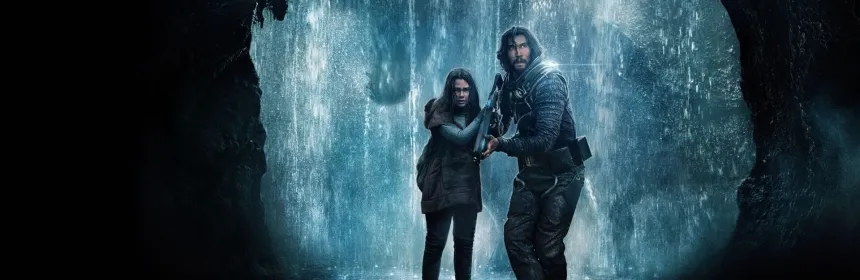
Should you dedicate your evening to watching 65 (2023)? This film promised a high-concept sci-fi survival thriller starring Adam Driver, stranded on prehistoric Earth with dinosaurs. It’s a simple pitch, almost too simple. But often, simplicity can be the foundation for effective tension and compelling character work. Knowing whether this particular cinematic journey delivers on its promise, or if it falls prey to its own lean premise, is crucial before you hit play. This breakdown will help you decide if 65 aligns with what you look for in a survival story.
The Core Premise: What is 65 (2023) Actually About?
At its heart, 65 is a straightforward survival story with a compelling sci-fi twist. We meet Mills, an interstellar pilot from a technologically advanced human-like species, on a long-duration mission. He’s transporting passengers across the galaxy, but his mind is heavily preoccupied with his family, particularly his ailing daughter. This personal struggle is established early, giving immediate depth to an otherwise stoic character. His motivation for taking this two-year journey is financial, intended to secure treatment for his child. This setup isn’t just backstory; it becomes the emotional engine that drives his actions throughout the perilous adventure.
Disaster strikes mid-journey. An unexpected asteroid field cripples his spacecraft, forcing an emergency crash landing onto an uncharted planet. The planet turns out to be Earth, but not the Earth we know. It’s 65 million years in the past, a lush, dangerous world teeming with creatures that are, to Mills, terrifyingly alien. And to us, they are very familiar: dinosaurs. Mills quickly discovers he is the sole adult survivor. He finds one other passenger, Koa, a young girl from his species who doesn’t speak his language. This language barrier adds a significant layer of isolation and challenge to their predicament.
Initial Setup and Character Motivation
Mills’ initial objective is clear: activate an escape pod from the crashed ship’s detached secondary section, now miles away. This pod is their only hope for rescue. The journey to this section forms the backbone of the film’s narrative. His motivation isn’t just self-preservation; it’s deeply tied to Koa’s survival, which he quickly adopts as a surrogate for his own daughter. This shift from personal grief to protective instinct is a strong emotional anchor. He uses his advanced weaponry, like a pulse rifle, to navigate the hostile environment. His tech is superior, but limited, creating a constant sense of vulnerability against a world that operates on brute force and ancient instincts. The reliance on this bond, despite the communication gap, becomes central to the entire experience, forging a silent, urgent partnership.
Unforeseen Complications on Earth
The landscape itself becomes a character. Dense jungles, treacherous caves, and active volcanoes present constant obstacles. Beyond the terrain, the inhabitants are the primary threat. We see various types of dinosaurs, from smaller, agile predators to enormous, stomping giants. These creatures aren’t just background elements; they are active hunters. Mills and Koa must evade, hide, and sometimes fight these prehistoric beasts. The ticking clock isn’t just about reaching the escape pod; it’s also about an impending asteroid impact, the very one that caused their crash, which promises to make the planet even more uninhabitable. This looming cataclysm adds a layer of dread and urgency to every step of their journey, pushing the stakes even higher.
Survival Stakes: How High Do They Go?
The film effectively communicates the severity of their situation. Mills is a trained pilot, but not a wilderness expert on an alien, dinosaur-infested planet. His technological advantages are countered by the sheer number and ferocity of the natural threats. Koa, being young and injured, further complicates matters, requiring Mills to balance his own survival with her protection. Every decision, from finding shelter to scavenging for food, carries immediate life-or-death consequences. The film emphasizes the vast, indifferent nature of prehistoric Earth, where two advanced beings are reduced to primal survival against overwhelming odds. It’s a race against both time and a relentlessly dangerous environment, where a single misstep could mean the end.
Adam Driver’s Performance: Does He Carry the Film?
Yes, Adam Driver absolutely carries 65 (2023). His performance is the anchor that grounds the entire film, especially given the minimal dialogue and heavy reliance on visual storytelling. He brings a profound sense of weary determination and internal conflict to Mills. From the opening scenes, his portrayal of a father burdened by grief and regret sets a somber, relatable tone. You feel his exhaustion, his moments of despair, and the deep-seated love that fuels his desperate drive to protect Koa.
Driver’s Minimalist Approach
Driver excels in conveying complex emotions through subtle gestures, facial expressions, and body language. Since Koa speaks a different language, much of their communication is non-verbal. Driver leverages this, using his eyes to express fear, concern, and resolve. He makes Mills’ desperation palpable without needing lengthy monologues. This minimalist acting style fits the survival genre perfectly, as characters often have little time or energy for exposition. Every strained breath, every wary glance, contributes to the tension. He makes the burden of survival feel incredibly real, translating physical struggle and emotional weight into a believable on-screen presence.
Dynamic with the Young Co-Star
The relationship between Mills and Koa is central, and Driver handles it with delicate precision. Despite the language barrier, he builds a convincing bond with Ariana Greenblatt’s Koa. He portrays a paternal instinct that slowly replaces his initial professional duty. Watching him navigate the challenges of protecting a child who doesn’t understand him, yet instinctively trusts him, is one of the film’s strongest elements. Their dynamic evolves from reluctant partnership to a deep, unspoken connection, where simple gestures like a shared glance or a protective hand become powerful moments. Driver’s performance elevates these interactions, making you invest in their joint plight and root for their survival against impossible odds.
Conveying Desperation and Resolve
Throughout the film, Driver consistently portrays Mills as a man pushed to his absolute limits. He is not a superhero. He makes mistakes, he gets hurt, and he experiences moments of profound fear. Yet, his resolve to save Koa, and through her, find a form of redemption for his inability to save his own daughter, never wavers. This dual layer of desperation and unwavering resolve makes his character compelling. Whether he’s meticulously planning an escape route or frantically battling a dinosaur, Driver ensures that Mills’ humanity and vulnerabilities are always at the forefront. This nuanced performance prevents the film from becoming a generic monster flick, instead making it a human story about resilience in an alien world.
Visuals, Sound, and Atmosphere: Are They Effective?
The technical aspects of 65 (2023) are critical in selling its prehistoric setting and high-stakes survival. The film attempts to immerse viewers in its dangerous world through its visual design, creature effects, and soundscape. Here’s how these elements stack up against typical expectations for a sci-fi thriller of this scope.
| Aspect | Expectations for a Sci-Fi Survival Film | Reality Delivered in 65 (2023) |
|---|---|---|
| Prehistoric Earth Design | Lush, alien, immersive, dangerous yet beautiful environments. | Visually appealing, verdant landscapes. Distinctive environments, though sometimes generic in their ‘alien’ feel. Good sense of scale for the prehistoric flora. |
| Creature Design & CGI | Realistic, terrifying, varied dinosaur species with believable movement and impact. | Mostly effective. The dinosaurs are well-rendered, particularly the larger predators. Their movements are fluid, and their sheer size creates genuine menace. Some smaller creatures lack distinctiveness. |
| Sound Design for Tension | Deep, rumbling roars, sharp snaps of foliage, ambient jungle sounds, impactful action sequences. | Excellent. The sound design is a standout. Dinosaur roars are powerful and distinct. The subtle jungle noises build tension. The crunch of footsteps, the metallic clang of Mills’ tech, and impact sounds are all used to great effect. |
| Overall Atmosphere | Constant dread, isolation, beauty mixed with terror. | Strong sense of isolation and danger. The film successfully creates a feeling of being utterly alone in a hostile world. The atmosphere of impending doom (asteroid) is palpable throughout. |
Prehistoric Earth Design Choices
The visual team clearly put effort into creating a believable ancient Earth. The landscapes are often breathtaking, with vibrant greens and ancient, towering trees that feel truly primeval. There’s a good sense of scale, which is crucial when depicting environments that dwarf human-like figures. While some parts of the jungle might feel like standard ‘dangerous forest’ tropes, the occasional glimpses of unique geological formations or atmospheric weather events add to the distinctiveness. The color palette often leans into a darker, moodier tone, emphasizing the danger lurking in the shadows. This aesthetic choice generally supports the film’s somber, survivalist theme, making the world feel formidable and unforgiving.
Creature Design and CGI Impact
The dinosaurs are, of course, a major draw, and the CGI delivers. The larger carnivores are particularly impressive, with detailed textures and convincing movements that make them feel like genuine threats. You can feel the weight and power behind their every stomp and roar. These creatures are not just props; they are active, intelligent predators. The film wisely focuses on a few key species, allowing for more detailed and impactful renditions. While some of the smaller, swarming creatures might be less memorable, the primary antagonists are sufficiently terrifying. The interaction between the CGI creatures and the live-action actors is seamless, avoiding the uncanny valley that can sometimes plague creature features. Their presence drives the narrative, making every encounter feel dangerous and unpredictable.
Sound Design for Tension
If there’s one aspect that truly elevates the film’s atmosphere, it’s the sound design. The roars of the dinosaurs are guttural and distinct, each species having its own menacing call that sends shivers down your spine. Beyond the obvious, the ambient sounds of the prehistoric jungle are meticulously crafted. The subtle rustling of leaves, the distant calls of unseen creatures, the splash of water – all contribute to a pervasive sense of unease and heightened awareness. During action sequences, the sound mixing is precise: the sharp crack of Mills’ pulse rifle, the heavy thud of a dinosaur’s footfall, the tearing of foliage. These elements work synergistically to enhance the visual action, creating a truly immersive and often terrifying experience. The soundscape ensures that even when nothing is explicitly shown, the threat of the environment remains very real.
Pacing and Plot: Does the Thrill Hold Up?
The pacing in 65 (2023) is a critical factor in its success as a thriller. A survival film needs to maintain a consistent sense of urgency and danger, building tension without becoming repetitive. Here’s a look at how the plot unfolds and if it sustains its thrilling premise:
- Early Momentum and Crash Landing: The film establishes its premise quickly. We’re introduced to Mills and his personal stakes efficiently before the asteroid collision. The crash sequence itself is intense and chaotic, immediately throwing the characters and audience into disarray. This opening sets a high bar for adrenaline and suspense. The initial discovery of prehistoric Earth and the first dinosaur encounters are handled with good shock value, establishing the rules of this dangerous new world without excessive exposition.
- The Core Journey and Mid-Film Lulls: Once Mills and Koa begin their trek to the escape pod, the film settles into a rhythm of travel, obstacle, and threat. This section includes numerous encounters with various dinosaurs, navigational challenges, and moments where Mills has to protect Koa. While individual encounters are well-executed, the sequence of “walk, encounter dinosaur, escape” can feel somewhat repetitive at times. There are periods where the narrative relies heavily on jump scares or close calls, which, while effective initially, can lose their impact if overused. The emotional beats between Mills and Koa are vital here, preventing the film from becoming a monotonous chase.
- Escalating Threats and the Asteroid Timer: The plot consistently reminds us of the impending asteroid impact, which serves as a crucial ticking clock. This external threat pushes the characters forward and adds a layer of global catastrophe to their personal struggle. As they get closer to their goal, the threats become larger and more frequent, building towards a climactic confrontation. The film effectively uses the environment, such as treacherous caves or unstable terrain, to vary the challenges and prevent every encounter from feeling identical.
- The Climax and Resolution: The film culminates in a frantic race against time, with Mills and Koa facing off against the largest and most dangerous predators as the asteroid impact looms. The final sequence is packed with action and heightened tension, bringing all the established threats to a head. The resolution provides a clear ending to their immediate survival ordeal, while also subtly acknowledging the broader, cataclysmic event. It ties back to Mills’ original motivation, offering a sense of closure to his personal journey.
Addressing Common Criticisms of 65 (2023)
When considering 65 (2023), some common points of critique arise. Understanding these can help set your expectations appropriately.
Is the Plot Too Simple?
Yes, the plot of 65 is undeniably simple. It boils down to “two survivors, one goal, many dinosaurs.” There are no intricate subplots, no major twists that redefine the narrative’s core. However, this simplicity can be viewed as both a strength and a weakness. For some, it’s refreshing; it allows the film to focus purely on the tension of survival and the character dynamics. It’s a lean, efficient narrative machine. For others, particularly those expecting deep lore or complex storytelling in their sci-fi, it might feel underdeveloped. The film trades narrative complexity for immediate, visceral thrills. If you’re looking for a straightforward, action-packed experience without needing extensive world-building, the simplicity works in its favor.
Are the Dinosaurs Just Generic Monsters?
The dinosaurs in 65 are primarily portrayed as threats, certainly. They are not characters with motivations beyond instinct. They are forces of nature, apex predators in their own domain. While the film doesn’t delve into detailed paleo-accuracy or give them distinct personalities, their depiction is far from generic. The CGI is strong, and their movements are fluid and menacing. The film does a good job of showing different species with varied hunting behaviors, making each encounter feel distinct. For instance, the smaller, swarming creatures create claustrophobic terror, while the larger carnivores embody overwhelming power. They serve their purpose effectively: to be terrifying, relentless obstacles that drive the human drama. They aren’t generic because of how well they’re realized visually and audibly as immediate, tangible dangers.
Does the Ending Feel Rushed?
The final act of 65 is a whirlwind, culminating in the asteroid impact. Some viewers might find the resolution to Mills and Koa’s immediate journey, amidst such a global catastrophe, to be somewhat abrupt. The pacing accelerates dramatically in the last 15-20 minutes, pushing towards a definitive conclusion. This rapid acceleration is designed to mirror the intensifying global threat and the desperate scramble for survival. While it provides a clear end to their immediate peril, the broader implications of the asteroid event are understandably condensed. It focuses on the personal triumph of survival against impossible odds rather than a lengthy aftermath. If you prefer a more drawn-out resolution, it might feel a little fast, but it effectively closes the character’s arc within the given timeframe.
Final Verdict: Should You Watch 65 (2023)?
Yes, you should watch 65 (2023) if you appreciate straightforward, intense sci-fi survival thrillers with a strong lead performance. It’s not a deep philosophical journey or a sprawling epic, but it delivers exactly what its premise promises: Adam Driver versus dinosaurs on prehistoric Earth, with high stakes and effective tension. For a focused, action-driven experience, it’s definitely worth your time.