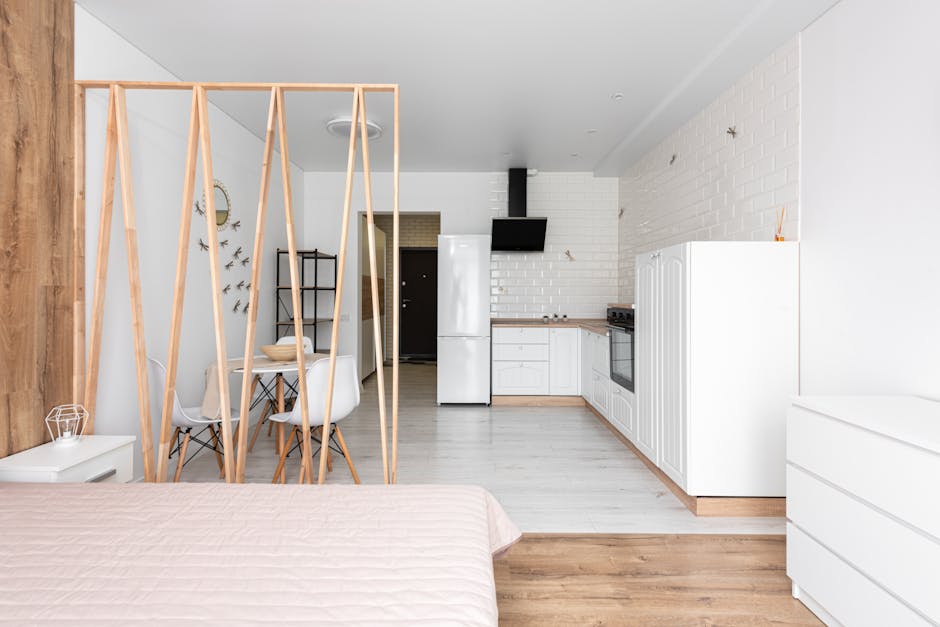
The average person moving into a first apartment spends between $1,500 and $3,000 on furnishings and essentials in the first month. A significant chunk of that goes to things they will not use in six months. This guide names the items that genuinely change how livable a space feels — with specific products and real prices, not category placeholders.
This is not financial advice. These are product observations and cost comparisons based on publicly available pricing.
Five Things Every Apartment Needs Before Move-In Day
Most moving checklists are written by retailers. They include 47 items because 47 items means 47 purchase opportunities. The real list is much shorter. Before any decorative item enters the apartment, these five categories need to be covered.
A functional sleep setup
You can sleep on a mattress on the floor for weeks without real consequences. You cannot sleep well on a bare or inadequate sleep surface. On night one, you need a fitted sheet, a flat sheet, and two pillowcases — nothing more. The Amazon Basics Microfiber Sheet Set runs $22–$28 for a queen and washes without shrinking. It is not luxurious. It is clean and functional while you figure out what you actually want. Do not buy a full coordinated bedding set with decorative shams on week one. Your color preferences will shift once the apartment has furniture in it.
A way to cook one meal
Not a fully stocked kitchen. One skillet and one pot. The Lodge 10.25-inch Cast Iron Skillet ($35 at most retailers including Amazon, Target, and Walmart) handles eggs, protein, sautéed vegetables, and pan sauces without issue. A 3-quart saucepan covers pasta, soup, and grains. Two items, under $80 combined, and you can cook 90% of weeknight meals without owning anything else. The Lodge, specifically, lasts decades with minimal care — buying it once is the only purchase you’ll ever make in that category.
Bathroom basics and nothing extra
Two bath towels, one hand towel, toilet paper bought in bulk, liquid hand soap, and a shower curtain with rings if the bathroom doesn’t have a door. That is the complete day-one bathroom list. Threshold bath towels at Target cost $8–$12 each and hold up through 50+ wash cycles without falling apart. Skip the matching bath mat set, the decorative soap dispenser, and the tiered shelf organizer — none of those decisions need to be made before you know how you actually use the bathroom daily.
Light beyond one overhead fixture
Most apartments have a single overhead fixture per room. That is enough for daytime but genuinely uncomfortable for evenings. One floor lamp or desk lamp in the main living area changes how the space feels significantly. The TaoTronics LED Floor Lamp ($45) offers four color temperatures and five brightness levels, which matters more than it sounds when you are reading or working at night and the overhead light creates harsh shadows. Buy one before you unpack anything else.
A surge protector with enough outlets
Every apartment has too few outlets placed in inconvenient locations. The Belkin 12-Outlet Power Strip Surge Protector ($35) solves this on day one and protects your electronics from voltage spikes. Surge protection is not optional in older apartment buildings with inconsistent wiring. Buy this before you plug anything in.
Essentials vs. Nice-to-Haves: A Direct Cost Comparison
Retailers blend necessities and aspirational items in the same category to inflate average cart sizes. This table separates what you need from what can wait — and gives you the honest budget version for each essential:
| Item | Essential or Optional | Best Budget Pick | Approx. Price | When to Upgrade |
|---|---|---|---|---|
| Bed frame | Optional — month 1 | Mattress on floor | $0 | When you stop moving apartments |
| Cast iron skillet | Essential | Lodge 10.25″ Cast Iron | $35 | Never — this lasts decades |
| Vacuum | Essential (carpet) / optional (hardwood) | Shark IZ140 Cordless | $130 | If you have pets — upgrade to Dyson V8 ($350) |
| Stand mixer | Optional | Skip entirely | $0 | Only when you bake weekly, consistently |
| Knife set (8-piece block) | No — one knife replaces all of them | Victorinox Fibrox 8″ Chef’s Knife | $45 | When you cook daily and want a Japanese blade |
| Dinnerware set | Essential, but buy cheap | IKEA DINERA 18-piece set | $29.99 | When you own your home |
| Coffee maker | Depends on your habit | Hario V60 Dripper | $22 | Add Baratza Encore grinder ($170) if you’re serious |
| Surge protector | Essential | Belkin 12-Outlet | $35 | Already sufficient — don’t upgrade |
| Bath towels | Essential | Threshold at Target (2-pack) | $20–$24 | When texture actually matters to you |
| Television | Optional | TCL 40″ 1080p Smart TV | $180 | When you want 4K content on a larger screen |
The pattern holds across every row: tools you touch daily are worth buying right. Items that sit in a cabinet or gather dust can wait until you know your actual habits.
The Most Overlooked Apartment Essential
3M Command Strips and hooks are more useful on day one than almost any piece of furniture. A $12 pack lets you mount storage, organizers, and wall art without drilling — which means you keep your security deposit. Most first-time renters buy decorative shelves and frames before buying the hardware that makes them work. Buy three packs of Command Strips and one pack of large Command hooks before you unpack a single box. You will use all of them within a week.
Kitchen Setup Without a $400 Williams Sonoma Order

The kitchen consistently produces the most first-month overspending. These are the decisions that actually matter:
Do you actually need an Instant Pot?
If you cook batch meals on weekends, yes. The Instant Pot Duo 7-in-1 ($89) replaces a slow cooker, pressure cooker, rice cooker, and steamer in a single appliance. That is a real consolidation for a small kitchen. If you rarely cook, it is a $89 surface for mail to accumulate on. The honest advice: wait six weeks, see how often you actually cook, then buy it. The price doesn’t change. Your habits will tell you whether you need it.
What is the minimum viable knife setup?
One knife. The Victorinox Fibrox Pro 8-inch Chef’s Knife ($45) is used in professional kitchens and regularly outperforms knives costing three to four times as much in independent cutting tests. You do not need a knife block with eight pieces. You need one sharp, well-balanced chef’s knife and a $10 pull-through sharpener to maintain it. Eight-piece knife blocks are a marketing product. One good knife is a kitchen tool.
What about dishes and glasses?
The IKEA DINERA 18-piece dinnerware set costs $29.99 and handles daily use without chipping excessively. More importantly, it’s cheap enough that breaking a bowl doesn’t matter. Do not buy expensive or fragile dishware for an apartment you might leave in 12 to 18 months. Save that decision for a space you plan to stay in.
Coffee maker: necessary or skippable?
Only buy one if you drink coffee daily. The Hario V60 Dripper ($22) produces genuinely excellent coffee using no electricity, no machine maintenance, and no counter space. It requires about three minutes and a $6 bag of filters. If you want to improve quality further, the grinder matters more than the brewing device — the Baratza Encore burr grinder ($170) is the right entry-level investment. Skip both entirely if you’re a once-a-week coffee drinker. The math on a $170 grinder doesn’t work for six cups a month.
Where First-Time Renters Lose $200–$500 in Month One
These are the specific patterns that consistently drain new apartment budgets — not because the items are bad, but because they’re bought at the wrong time or in the wrong quantity:
- Decorative items before the furniture layout is settled. Throw pillows, wall art, and candles purchased before you know your floor plan frequently end up not fitting the room. Wait until month two. You will make better choices and spend less.
- Full cookware sets instead of individual pieces. A 10-piece cookware set sounds like a deal. In practice, you will use the 10-inch skillet and the 3-quart saucepan and stack the rest in a cabinet. Buy the two pieces you need for $60 total. Buy the third piece when you identify a gap.
- Cleaning supplies beyond a three-product starter kit. You need an all-purpose spray (Method All-Purpose, $3.49), dish soap, and a bathroom cleaner. That covers 90% of cleaning tasks. Specialty cleaners — stone countertop cleaner, grout cleaner, hardwood floor polish — are determined by what your specific apartment surfaces actually require. Buy those after you know what you’re cleaning.
- An extensive tool kit when three tools cover almost everything. Most apartment maintenance requires a hammer, a Phillips screwdriver, a flathead screwdriver, and a tape measure. The Stanley 4-Piece Homeowner’s Basic Tool Set ($20) covers all of this. A 200-piece tool chest is genuinely not useful in a rental apartment where maintenance calls are covered by the landlord.
- Storage furniture before you know what you need to store. The most repeated mistake: buying an IKEA KALLAX shelving unit ($59–$199) or a drawer dresser before understanding your actual storage problem. Live in the space for three weeks. The storage gaps will become specific and obvious. Then buy furniture that solves the real problem, not the imagined one.
These five categories account for $200–$500 in average first-month overspending. That is real money — enough for a quality mattress upgrade or a month of utilities.
Bedroom and Sleep Investments Worth Making Early
The bedroom is the one room where early investment compounds daily. Poor sleep from an inadequate mattress or wrong-loft pillow affects energy, mood, and focus in ways that other apartment deficiencies don’t. Spend money here before buying a couch or decorating a single wall.
Mattress: the price floor that actually matters
Below $300 for a queen mattress, quality drops sharply. Coil count, foam density, and edge support all deteriorate at that price point, and most mattresses in that range show visible sagging within 8–12 months. The Tuft & Needle Original Mattress ($595 queen) and the Casper Element ($595 queen) sit at the lower boundary of genuinely good sleep. Both companies offer 100-night return windows — which matters because mattress feel is difficult to evaluate in a showroom setting.
If $595 is genuinely not accessible in month one, the Zinus 10-inch Hybrid Pocket Spring Mattress ($280 queen) outperforms its price class and doesn’t produce the sag problem that cheaper all-foam mattresses develop. It won’t feel like a Casper. It won’t hurt your back either, which is the minimum threshold for a mattress.
Pillows: the decision most people get wrong twice
Most people buy two pillows in a set because it’s convenient, sleep badly, and then buy two more. Pillow choice depends on sleep position. Side sleepers need high loft (3–4 inches of fill); back sleepers need medium (2–3 inches); stomach sleepers need low or no pillow. The Coop Home Goods Original Adjustable Pillow ($75) uses removable fill so you can dial in the exact loft for your position. It is the right first pillow purchase precisely because it eliminates the guesswork that causes people to buy three pillows before finding one that works.
Blackout curtains before decorative curtains
Most apartments receive light from street lamps, signage, or neighboring buildings throughout the night. Standard decorative curtains do not block this. The NICETOWN Blackout Curtains (two-panel set, $25–$35) reduce both incoming light and outside noise. They also make a room look substantially more finished than bare windows. At $30 for a two-panel set, this is one of the highest return-on-investment items on this entire list — measurable impact on sleep quality at minimal cost.
The 30-Day Rule for Everything Else
Any apartment item that isn’t on the immediate-need list should wait 30 days. Write it down. Live without it. Revisit the list at the end of the month. Most items never get purchased — because living in a space reveals that the imagined need was not a real one. The items still on the list after 30 days are the ones genuinely worth spending money on.
The correct spending sequence for a new apartment: sleep quality first, kitchen function second, storage solutions third, everything decorative last. Follow that order and you will spend less total, keep more of what you buy, and end up with an apartment that functions around how you actually live — not how a retailer’s marketing team predicted you would.