
You’ve boxed up the bedroom, cleared the living room, and then you open the kitchen cabinets. That’s where most move-out plans fall apart. The kitchen has more small items, more sticky surfaces, and more potential for deposit deductions than any other room. This checklist walks you through exactly what to do — in order — so you don’t lose your deposit or leave something behind that costs you $200 later.
What You Absolutely Must Pack (and What to Toss)
Start with a hard rule: if you haven’t used it in six months, it goes in the donate or trash pile. Moving costs roughly $0.50 to $1.00 per pound when you factor in boxes, tape, and mover time. A blender you used once in 2026 is costing you real money to move.
Keep these items every time
- Knife block and chef’s knife (a Wüsthof or Victorinox chef’s knife runs $40–$150 — replace it and you’ll feel the sting)
- Cast iron skillet (Lodge 10.25-inch, about $25 — heavy to move, but replacing it costs more than the moving weight)
- Measuring cups and spoons (OXO Good Grips set, $12 — cheap but annoying to rebuy)
- Cutting boards (one wood, one plastic — Epicurean boards start at $20)
- Instant Pot or rice cooker (Instant Pot Duo 6-quart, $80 — bulky but worth keeping)
Items you should toss or donate
- Plastic containers with missing lids (nobody wants them, and they take up space)
- Expired spices (most lose potency after 1–2 years)
- Mismatched mugs (keep your top 4, donate the rest)
- Baking sheets with nonstick coating that’s flaking off (replace with Nordic Ware, $20)
- Any small appliance you haven’t plugged in since the last move (toaster, panini press, yogurt maker)
Mistake to avoid: packing empty jars and bottles. They weigh nothing alone, but they fill boxes fast and make them heavy. Recycle them before you pack.
The 3-Step Cleaning Sequence That Saves Your Deposit

Landlords deduct for kitchen grease more than any other single issue. I’ve seen a $150 deduction for a stove that looked clean but had baked-on grime under the burner caps. Here’s the order that works.
Step 1: Degrease everything above eye level
Start with the range hood filter. Pop it out, soak it in hot water with dish soap and baking soda for 20 minutes, then scrub with a soft brush. A greasy filter signals to the landlord that you didn’t clean anything. Same goes for the top of the cabinets — run your finger along the top edge. If it comes back greasy, you have work to do. Use a 50/50 vinegar-water spray and a microfiber cloth.
Step 2: Oven and stove surface
For the oven, use the self-clean cycle if it has one — but do this 24 hours before your final walkthrough because it smells and takes hours. For the stovetop, remove each burner cap and soak them. A glass stovetop needs a dedicated cleaner like Weiman Glass Cook Top Cleaner ($6) and a razor scraper for burnt-on spots. Don’t use abrasive pads on glass — they leave micro-scratches that collect dirt.
Step 3: Sink and dishwasher
Fill the sink with hot water and a cup of white vinegar. Let it sit for 15 minutes, then scrub with baking soda as a mild abrasive. For the dishwasher, run an empty cycle with a cup of vinegar in a bowl on the top rack. Clean the rubber seal around the door — that’s where mold hides and landlords look.
| Area | Common Deposit Deduction | Time Needed | Cost to Fix If You Skip It |
|---|---|---|---|
| Oven interior | Burnt-on food, grease | 2 hours (self-clean + wipe) | $75–$150 |
| Range hood filter | Grease buildup | 30 minutes | $50 |
| Stovetop burner caps | Stuck-on grime | 20 minutes | $40 |
| Dishwasher seal | Mold or mildew | 15 minutes | $60 |
| Cabinet tops | Grease layer | 10 minutes | $30 |
The verdict: spend 3 hours on deep cleaning, or lose $200–$300 of your deposit. The math is simple.
What Landlords Actually Check in the Kitchen (and What They Ignore)
I asked three property managers what they inspect in a move-out kitchen. Their answers were almost identical. Here’s what they look at first, and what they don’t care about.
Things landlords check (in order)
- Stove and oven — they open the oven door and look at the interior. They pull off a burner cap. If either is dirty, they assume the whole kitchen is dirty.
- Refrigerator — they check the interior for spills and the rubber gasket for mold. A musty fridge is a red flag.
- Sink and faucet — they look for hard water stains, leaks under the sink, and whether the garbage disposal works.
- Cabinet interiors — they open three random cabinets to check for crumbs, sticky residue, or pest droppings.
- Floors — they look for grease splatters near the stove and crumbs along the baseboards.
Things they rarely check
- Inside the dishwasher (unless it looks visibly dirty from the front)
- The top of the refrigerator (but clean it anyway — it’s easy and shows effort)
- Inside drawers (a quick glance, but they won’t pull everything out)
- Lightbulbs (they check that the fixture works, not the bulb type)
Mistake to avoid: spending 2 hours scrubbing the inside of cabinets that are already clean, while leaving a greasy stovetop. Prioritize the things they actually inspect.
Packing Order That Prevents Broken Glasses and Lost Lids
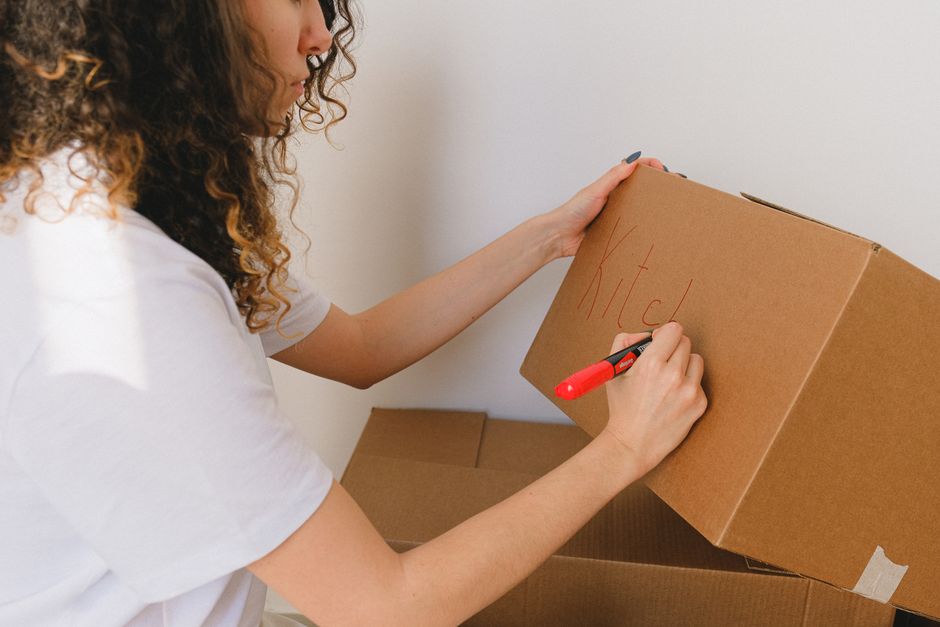
Most people pack the kitchen in a panic on moving day. That’s how you end up with a box labeled “kitchen stuff” that contains a blender, loose silverware, and three wine glasses wrapped in a bath towel. Here’s a better order.
Week before moving day
Pack everything you won’t use in the last week: specialty bakeware, holiday dishes, the air fryer, extra mixing bowls. Use small boxes (1.5 cubic feet or less) for heavy items like plates and cast iron. Large boxes filled with plates get too heavy and the bottom falls out. Dish packs — boxes with reinforced dividers — cost about $2 each from U-Haul and are worth it for glassware.
Two days before
Pack the everyday dishes and cookware you can live without. Keep one pot, one pan, one plate, one bowl, one mug, and one set of silverware out. That’s enough to eat for two days. Pack the rest.
Moving day morning
Pack the essentials you used for breakfast: that one pot, the coffee maker, the mug. Wrap glass items in packing paper, not newspaper — newspaper ink transfers to glass and looks terrible. Use Duck brand packing tape ($5 for a roll) rather than cheap tape that doesn’t stick. Seal every box with two strips of tape across the bottom and two across the top, forming an “H” pattern.
Common failure: putting heavy items in large boxes. A 3-cubic-foot box full of plates weighs 40+ pounds. You will drop it. Use small boxes for heavy items and large boxes for lightweight things like plastic storage containers and dish towels.
When It Makes Sense to Leave Certain Items Behind
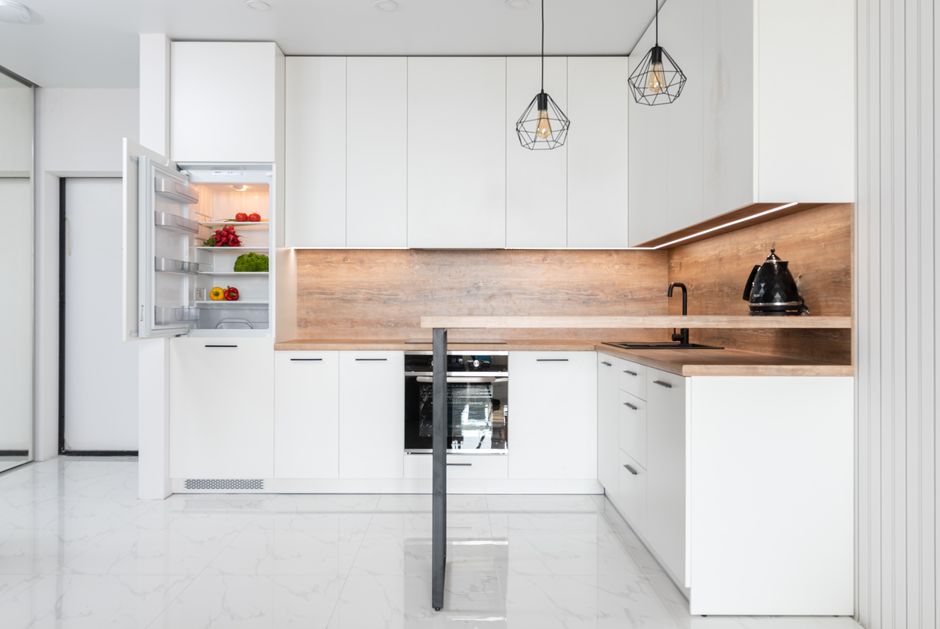
Not everything in your kitchen is worth moving. This is the part most checklists skip. Here’s when you should leave something and buy a replacement later.
Items cheaper to replace than move
- IKEA cutting boards ($3–$5) — not worth the box space
- Plastic colander ($6) — takes up disproportionate space
- Cheap nonstick pans (T-fal, $25) — they scratch and wear out; buy fresh ones at the new place
- Mason jars ($1 each) — you probably have 15 of them and use 3
- Old spices (McCormick, $3 per jar) — they lose flavor after a year anyway
Items worth moving every time
- All-Clad stainless steel pots ($100+ per piece) — these last decades
- Vitamix blender ($350+) — heavy, but replacing it costs real money
- Good chef’s knife (Shun or Wüsthof, $100+) — you need it daily
- KitchenAid stand mixer ($300+) — bulky but irreplaceable at that price
The rule of thumb: if the item costs less than $10 and takes up more than 0.5 cubic feet, donate it. You’ll spend more in moving costs than the replacement value. For items between $10 and $50, ask yourself: “Will I buy the same thing within a month of moving?” If yes, move it. If no, donate it.
Final recommendation: Start this checklist two weeks before your move-out date. Pack the non-essentials first, clean in the order described above, and do a walkthrough with your phone camera after cleaning. Photograph the stove, sink, fridge interior, and cabinets. If your landlord tries to deduct for something that was already damaged, you have proof. That single habit has saved me $400 in disputed deposits over two moves.